Bedding • Safe sleep • Materials
A Safer Sleep Surface: Choosing an Organic Crib Mattress
A crib mattress is easy to mistake for a simple purchase: choose a material, pick a size, and make the bed. But the decision involves more than a label. A baby’s sleep surface must fit the crib closely, remain firm and flat, and be used in a way that follows current safe-sleep guidance. Organic materials and third-party certifications can help explain how a product was made. They do not replace those essentials.
Published October 15, 2026
Shopping for an organic crib mattress often begins with a reasonable question: what is inside it? Cotton, wool, latex, foam, waterproof barriers, and ticking—the fabric covering the mattress—can all appear in product descriptions. So can terms such as “natural,” “chemical-free,” and “non-toxic,” which may sound reassuring but do not always explain precisely what a mattress contains or how its claims were verified.
Construction matters. So do fit, firmness, and care. A crib mattress is not a decorative layer or a miniature version of an adult bed. It is the base of a sleep space where simplicity is a safety principle. The right choice is not necessarily the one with the longest list of materials or the most expansive environmental language. It is one that fits the crib, provides a firm and flat surface, is used according to its instructions, and supports a safe-sleep setup.
This guide considers the questions worth asking before purchase: what mattress layers do, what organic certifications can establish, how to check crib mattress fit, and what to know about cleaning and spills. It is general information, not a substitute for current advice from a pediatric health professional or public-health authority. Safe-sleep recommendations can be updated; check current guidance where you live and follow the instructions supplied with the crib and mattress.
Start with the sleep surface, not the label
For an infant’s sleep, the broad safety priorities are consistent: use a firm, flat, separate sleep surface designed for the baby’s age and use; place the baby on their back; and keep the sleep space clear of soft objects and loose bedding. A fitted sheet made for the mattress is generally the only bedding placed on the surface. Avoid adding pillows, quilts, blankets, positioners, stuffed toys, or other soft items to the crib. Follow current local safe-sleep recommendations, as well as the crib and mattress manufacturers’ instructions.
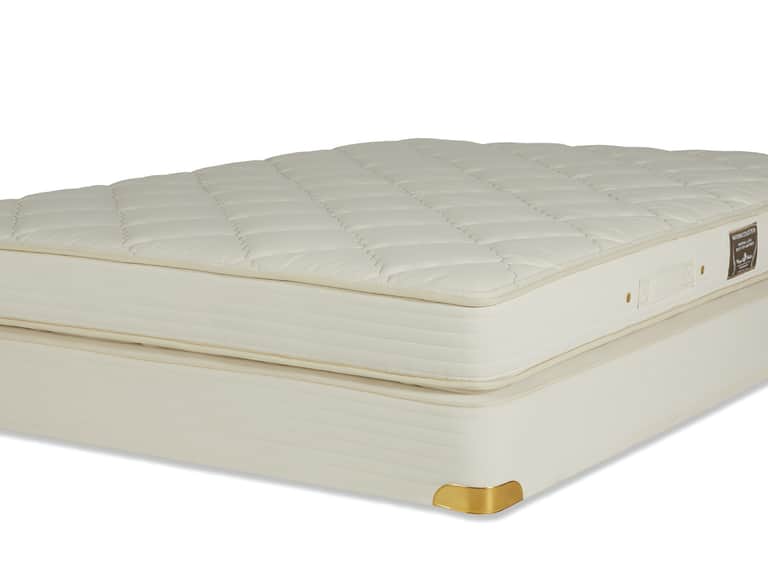
“Firm” does not mean uncomfortable by adult standards, and it is not a judgment based on whether a mattress feels pleasant when an adult presses a hand into it. A baby’s mattress should not conform deeply beneath the body. The surface should remain level and supportive, without a slope, soft depression, or added cushion. If a product is described as plush, pillow-top, or designed to add softness, that language deserves particular scrutiny when the intended use is an infant crib.
Organic content does not change these fundamentals. A mattress made with certified organic fabric can still be the wrong size, too soft, damaged, or used with an unsafe accessory. Likewise, the word “organic” does not tell you, by itself, whether a mattress has been assessed for every potential hazard or whether its firmness and fit suit a particular crib. Think of material claims as one part of an evaluation—not a shortcut around it.
Understand the layers and their jobs
A crib mattress is typically made from several components: a supportive core, one or more comfort or insulating layers, an outer cover, and sometimes a moisture-resistant barrier. The names of the materials tell only part of the story. Thickness, density, construction, seams, and the way layers are assembled affect how the mattress performs and how it can be maintained.
The core: support and structure
The core gives the mattress its shape and firmness. Common constructions include foam cores and innerspring units. Foam products vary by formulation and density; an innerspring mattress uses a network of metal coils, often with padding or insulation above and below. Neither category is automatically the safer or better choice simply because of its name. Look for a product intended for crib use, and assess its firmness, stated dimensions, condition, and instructions rather than assuming that one material guarantees a particular outcome.
Some mattresses use natural latex or other plant- and animal-derived materials. “Natural” describes a source, not a complete safety assessment. Ask what the material is, where it appears in the construction, and whether it has relevant certifications or testing. For infants with a diagnosed allergy or other health concern, discuss materials and exposure questions with a qualified health professional rather than relying on marketing copy.
The cover: the surface that meets the sheet
The cover, or ticking, encloses the mattress and may be made from cotton, polyester, or a blend. A natural-fiber cover can appeal to families seeking particular sourcing or feel, but fabric composition alone does not determine the complete mattress’s performance. Check the care label, seams, closures, and whether the cover is fixed or removable. A removable cover is not automatically machine-washable, and removing it may not be appropriate unless the manufacturer explicitly permits it.
Printed claims such as “breathable” can mean different things in different contexts. They do not justify placing a baby face-down or adding aftermarket products, nor do they replace a firm, flat sleep surface and an uncluttered crib. Use the mattress as designed, and do not alter its layers or cover.
Fillings and barriers: what is added, and why
Between the core and cover, manufacturers may use padding, batting, or insulating layers. Wool, cotton, and synthetic materials are among the possibilities. Some products also include a water-resistant membrane beneath the cover. These components can affect moisture management, durability, feel, and care requirements. A description should make clear which materials are present and where they are used; vague phrases such as “eco-friendly construction” are not a substitute for an ingredient or component list.
Water resistance can make some cleanups easier, but it is not a reason to use an unapproved extra layer. Add only a fitted sheet intended for the mattress, and follow both manufacturers’ instructions for any mattress protector. If the product’s safety information is unclear, contact its manufacturer before use.
What organic certification can—and cannot—tell you
Certifications can make a materials claim more specific by identifying an independent standard, the organization behind it, and the part of a supply chain or product covered. But certification names are not interchangeable. A certificate may apply to a textile, a component, a processing facility, or a finished product. Read the scope and look for documentation that matches the exact item being considered.
GOTS, the Global Organic Textile Standard, is a textile-processing standard with requirements that include organic fiber content and environmental and social criteria across covered processing stages. When a seller says a crib mattress is “GOTS certified,” ask whether the certification applies to the finished mattress, the fabric, or particular components. A certification logo in a product listing is not enough to answer that question. Seek the certifying body, certificate number or documentation, and the product’s precise certification status.
Other marks may address different questions. A product-emissions certification, for example, is not the same as an organic-fiber certification. A material-safety or chemical-restriction claim may concern particular substances or testing conditions, not every aspect of manufacturing or use. Certifications can be useful evidence, but no single mark should be treated as a universal guarantee of safety, low environmental impact, or suitability for every baby.
Be alert to claims that sound absolute. “Chemical-free” is not a useful literal description: all materials are made of chemicals, including water and natural fibers. More informative language identifies the materials, the substances the product is claimed to exclude, and the standard or test used to support the claim. “Non-toxic” can also be too broad to assess without knowing what was tested, how, and against which criteria.
A practical approach is to compare documentation, not just badges. Confirm the certifier’s name, verify that the certificate is current where possible, and check that the product or relevant component is within its scope. If the seller cannot clarify what a label covers, treat the claim as incomplete rather than filling in the gaps yourself.
Fit is a safety check, not a finishing detail
A crib mattress should fit the specific crib closely, with no large gaps at the edges. Crib and mattress dimensions may be described using standard terms, but labels alone do not guarantee a close fit in every combination. Before buying, check the crib manufacturer’s required mattress dimensions and the mattress maker’s stated size. If possible, confirm fit in the actual crib and follow the crib instructions for any fit check.
With the mattress in place, inspect all sides and corners. It should lie flat and should not bow, buckle, or leave an obvious space between its edge and the crib frame. If it does not fit securely, stop using that combination and contact the manufacturers for guidance. Do not try to fill a gap with towels, padding, foam, or another improvised object. Do not trim a mattress to make it fit.
Fit can change if the crib or mattress is damaged, assembled incorrectly, or used with an incompatible component. Check that the crib is assembled as directed and that the support platform is secure. If using a previously owned crib, confirm that it is intact and meets applicable current safety requirements. A mattress that fits one crib is not automatically suitable for another, even if the cribs appear similar.
Inspect the mattress when it arrives and periodically during use. Look for tears, broken seams, exposed filling, deformation, persistent odors, or moisture damage. Follow the maker’s instructions about replacing the mattress after damage or contamination. Do not rely on a cover or protector to make a compromised surface usable.
Firm, flat, and free of add-ons
Some accessories are sold as comfort upgrades or protection against spills. For an infant, adding a soft layer can change the surface that was tested and designed by the mattress manufacturer. Mattress toppers, plush pads, wedges, positioners, and aftermarket inserts should not be added to an infant’s sleep space unless a qualified clinician has advised otherwise under specific circumstances. General product marketing is not a substitute for safe-sleep guidance.
Be particularly cautious with products marketed to prevent flat spots, improve sleep, reduce reflux, or keep a baby in a particular position. Such claims can sound practical, but they do not make a soft or inclined sleep surface appropriate. Use the crib as intended, place the baby on their back, and keep the space clear. If a baby has a medical condition that raises questions about sleep positioning or equipment, seek individualized advice from the baby’s healthcare provider.
A mattress pad designed for an adult bed or a household mattress protector may not be designed for a crib. Even when a product is made specifically for a crib, confirm that its instructions and safety information are compatible with current recommendations and with the mattress and crib being used. A fitted sheet should remain snug, without loose fabric or bunching.
Care, spills, and the limits of “washable”
Cleaning instructions are part of the mattress specification, not an afterthought. Some surfaces can be wiped; some covers may be removable; others are intended for spot cleaning only. A mattress can contain layers that are damaged by soaking, heat, detergents, or machine agitation. Before purchase, ask what routine care is allowed, how to respond to a spill, and whether the cover can be removed and laundered without affecting the product.
“Washable” needs context. Does it mean the cover, the entire mattress, or only a small removable component? Which wash cycle, water temperature, and drying method are permitted? Can the item be fully dried before returning it to the crib? Follow the manufacturer’s written directions rather than improvising with bleach, solvents, essential oils, or other cleaners. Do not use a mattress if it remains damp, smells of cleaning chemicals, or shows signs of damage.
For a spill, remove the fitted sheet and follow the care label promptly. If the instructions allow surface cleaning, use only the specified method and let the mattress dry completely. If liquid has penetrated the core, ask the manufacturer whether the mattress remains usable. The answer may depend on construction and the extent of contamination. A waterproof cover does not guarantee that the interior is unaffected.
Regular inspection is useful even when no accident has occurred. Check for stains, mold, tears, loose seams, or changes in shape. Keep the product’s care instructions and warranty information accessible. A warranty can explain coverage for manufacturing defects, but it does not establish that a mattress is a safe-sleep product or cover damage caused by unapproved cleaning or use.
A product-neutral checklist before buying
When product pages make every mattress sound gentle, breathable, and rigorously tested, a short checklist can bring the decision back to verifiable details. Compare products on the same questions rather than allowing a single appealing claim to dominate.
- Intended use: Is the mattress explicitly designed for the type of crib and age range in question?
- Dimensions: Do the stated measurements meet the crib manufacturer’s requirements, and can you verify a close fit in the crib?
- Surface: Is the mattress firm and flat, without a plush top, incline, or added cushioning?
- Construction: Are the core, cover, fillings, and any moisture barrier identified clearly?
- Certification: Which organization issued the certification, what exactly does it cover, and can the claim be verified?
- Care: Are cleaning, drying, and spill instructions specific and practical for your household?
- Condition and history: Is the mattress new or in verifiable good condition, with no damage, deformation, or contamination?
- Instructions: Are use, assembly, and care directions available and consistent with current safe-sleep guidance?
- Returns and warranty: Do the terms explain what happens if the mattress does not fit or arrives damaged?
Cost can be part of the comparison, but a higher price does not automatically mean a safer surface. Nor does a natural-material claim make a mattress inappropriate or appropriate on its own. A clear description, credible documentation, correct fit, and use consistent with current guidance provide a more useful basis for judgment than prestige or persuasive adjectives.
Questions worth asking a seller
When a listing leaves important details unstated, direct questions can reveal whether the seller understands the product and can support its claims. Ask for the mattress’s exact dimensions and materials breakdown, including the core, cover, and any barrier. Ask whether the product is intended for the crib model or size you have and what the manufacturer says about firmness, fit, and routine inspection.
For certification claims, ask for the certifier and a document showing the scope of certification. If a page describes the whole mattress as organic, ask whether the certificate covers the finished product or particular textile components. For care, ask whether the cover is removable, whether it can be washed, and what the manufacturer recommends after a spill that reaches the interior.
Good answers should be specific and consistent with the written product instructions. If the response relies on broad assurances—“completely safe,” “chemical-free,” or “perfect for every baby”—without meaningful explanation, look elsewhere for documentation. No retailer can replace a healthcare professional’s advice about an individual infant’s medical needs.
The bottom line
Choosing an organic crib mattress is an exercise in separating useful evidence from attractive language. Organic fibers may matter to a family’s sourcing priorities. Certifications can help clarify how materials were produced or tested. Construction details can explain what lies beneath the cover and what maintenance the mattress requires. Each is worth examining—but none outranks the basics of infant sleep safety.
Choose a mattress intended for the crib, verify that it fits closely, and use a firm, flat surface with a snug fitted sheet. Keep the sleep space clear of soft items and unapproved add-ons. Follow current safe-sleep recommendations, inspect the mattress, and respect its care instructions. When a claim is unclear, seek documentation; when fit or condition is uncertain, do not improvise.
That is the quieter promise of a well-chosen sleep surface: not a guarantee that every night will be easy, but a thoughtful foundation—one that is correctly fitted, clearly understood, and used with care.
Quick reference
- Prioritize a firm, flat crib surface and a close fit over marketing claims.
- Use only a snug fitted sheet and keep the infant sleep space free of loose bedding and soft objects.
- Read certification scope carefully; a component certificate is not automatically a whole-product certificate.
- Do not add toppers, wedges, positioners, or improvised padding to address comfort or fit.
- Follow the mattress maker’s care instructions and current safe-sleep guidance from relevant public-health authorities.